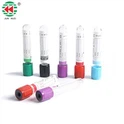

1. The light green head cover of the plasma separation tube, adding heparin anticoagulant into the inert separation tube, can achieve the purpose of rapid plasma separation. It is used for measurement and emergency plasma biochemical testing such as ICU. Plasma samples can be directly put on the machine and kept stable for 48 hours under refrigeration.
2. EDTA anticoagulation tube purple cap, ethylenediaminetetraacetic acid ((EDTA, molecular weight 292) and its salt are a kind of aminopolyacid, which can effectively chelate calcium ions in blood samples, chelate calcium or The removal of the calcium reaction site will block and terminate the endogenous or exogenous coagulation process, thereby preventing blood specimens from clotting. Suitable for general hematology tests, not suitable for coagulation tests and platelet function tests, and not suitable for calcium ions , Potassium ion, sodium ion, iron ion, alkaline phosphatase, creatine kinase and leucine aminopeptidase determination and PCR test.
3. The sodium cumelate coagulation test tube has a light blue cap. Sodium glutathione mainly acts as an anticoagulant by chelating with calcium ions in the blood sample. It is suitable for blood coagulation experiments. The anticoagulant concentration recommended by the National Committee for clinical laboratory standards (NCCLS) is 3.2% or 3.8% (equivalent to 0.109mol/domain 0.129mol/L). The ratio of blood is 1:9.
4. Sodium citrate erythrocyte sedimentation rate test tube with black cap, the sodium citrate concentration required for erythrocyte sedimentation rate test is 3.2% (equivalent to 0.109mol/L) The ratio of anticoagulant to blood is 1: 4
5. Potassium oxalate/sodium fluoride gray head cover. Sodium fluoride is a weak anticoagulant. It is usually used in combination with potassium oxalate or sodium diiodate. The ratio is 1 part of sodium oxalate and 3 parts of potassium oxalate. . 4mg of this mixture can prevent 1ml of blood from coagulating and inhibiting decomposition in 23 days. It is a good preservative for blood glucose determination. It cannot be used for the determination of urea by the urease method, nor is it used for the determination of alkaline phosphatase and amylase. , Recommended for blood glucose testing.
Use heparin anticoagulation vacuum tube and non-anticoagulation vacuum tube to collect about 7 ml of blood from the anterior vena cava, centrifuge at 3500 rpm for 10 min to separate the plasma and blood, and store at 80 degrees for inspection;
1 mL of blood was collected from the vena cava with EDTA K3 anticoagulation tube for white blood cell classification.
7 mL of blood was collected from the anterior vena cava with a heparin anticoagulation vacuum tube. The conversion rate of peripheral blood lymphocytes was determined.