
1. The quality of the rubber stopper for the vacuum blood collection tube
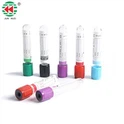
Due to the application of a large number of clinical examination automatic instruments, these automatic instruments, especially blood cell analyzers, are generally equipped with automatic capping devices. If the butyl rubber content of the vacuum blood collection tube stopper is not enough, the rubber stopper will be directly affected. The service life of the automatic cap piercing device. It has been reported that the wear rate of the suction needle of the automatic cap piercing needle is too high because the vacuum blood collection tube plugs produced by individual manufacturers are too hard. The original design life can reach 600,000 times of puncture rate. Reduced to 130,000 times, greatly shortening the service life of this type of instrument.
In addition, individual vacuum blood collection tube manufacturers reduce the factory-based rubber content of the vacuum blood collection tube rubber stoppers in order to reduce costs. After adding a large amount of filler, the rubber stoppers will become harder. In order to improve the hardness of the rubber stoppers, no softener is added. During the storage process, the softening agent flows into the blood collection tube and is adsorbed on the tube wall, which seriously affects the quality of the product.
2. Indicators such as the reliability of the label and individual needs
Because the label materials and label content used by various vacuum blood collection tube manufacturers cannot be unified, the labels of many manufacturers are not clear, and the labels are of poor quality and are easy to fall off. In addition, some large hospitals use their own barcode labels, together with the labels affixed by the manufacturer, to completely cover the outer wall of the vacuum blood collection tube, whether there is hemolysis, micro clots, fibrin filaments, and whether the blood collection volume is sufficient. In this case, it is recommended to purchase a vacuum blood collection tube with a transparent label. In order to observe the most hemolysis or normal blood coagulation inside the vacuum blood collection tube.